Lire en français · Ler em português
Shizuto Masunaga
Founder of the Iokai Shiatsu school in Japan
Shizuto Masunaga was born in 1925 in Kure, Hiroshima Prefecture, Japan. He was introduced to shiatsu at a very early age by his mother, who practised abdominal shiatsu on him and mixed with great shiatsu masters. He studied psychology at the University of Tokyo, then entered the Japan Shiatsu College, where he studied shiatsu with Tokujirō Namikoshi, the school’s founder. He went on to teach and work there for eight years. Through his own observation and research, he drew up a map of the meridians that was more complete than the one used in acupuncture and by Namikoshi. He found that the meridians run through both the upper and the lower limbs, which is not the case with the meridians of acupuncture and classical shiatsu. He developed his own style: rather than stimulating acupuncture points alone, he worked on the whole meridians, all along the body. For him, it was essential to approach the human being as a whole, both physically and emotionally. He also developed the Ampuku method (ampuku is abdominal shiatsu) and defined the diagnostic zones of the abdomen. His disagreement with Namikoshi led him to found his own school in 1968: the Iokai institute in Tokyo.
The term IO is inspired by the Buddhist sutra about the one who recognises imbalances and determines the appropriate means of restoring balance. KAI stands for association, communication between people under one roof.
His technique is based on “simultaneous diagnosis and treatment”, and his practice emphasises the idea of exchange between giver and receiver. His teaching rests on the concept of I SHIN DEN SHIN, meaning direct transmission from person to person, literally “from my soul to your soul”. Teaching can only pass from master to student, not through theoretical concepts.
In Japan, Masunaga is recognised as a brilliant innovator whose research is rooted in origins, practice and direct observation.
Until his death in 1981, he taught his shiatsu not only in Japan but also in Europe, Canada, the USA, Korea and Hong Kong.
“The circulation of ki is always better when we are completely relaxed and the mind is not attached to anything. Yet simple rest and relaxation are not enough to change our balance, because the pattern of tension created by our lifestyle tends to keep us in the same condition, and the adjustments needed for our particular type are not made.”
S. Masunaga
Masunaga’s books translated into French:
- Zen shiatsu, ou comment équilibrer le yin et le yang (Zen shiatsu, or how to balance yin and yang)
- Zen, exercices visualisés (Zen visualisation exercises)
- Shiatsu et médecine occidentale (Shiatsu and Western medicine)
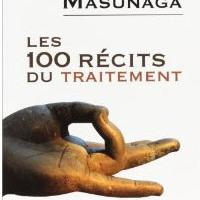
- Les 100 récits du traitement (100 treatment stories)
Kazunori Sasaki
Founder of Iokai Meridian Shiatsu Europe and president of the AISE (Association Iokai Shiatsu Europe)
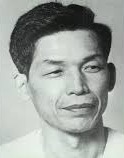
Before studying shiatsu, Kazunori Sasaki practised Neeshin-ryoho, a traditional Japanese therapy that stimulated the meridians by applying heated styluses.
In search of an understanding of Eastern spiritual thought, he made a long journey through India and Asia. Then, having joined Masunaga’s Iokai institute, he worked there for many years as a practitioner and as Masunaga Sensei’s assistant. He was the contact person for the European students who came through, and that is how he came to be invited, with Masunaga, to spread the teaching in Europe.
After Masunaga’s death, he was invited to continue his master’s work on the Eastern approach and to take further the research into the mind and the knowledge of traditional Eastern medicine through shiatsu.
Since then, Sasaki Sensei has lived in Europe, where he trains Iokai practitioners and teachers.
See also: What is shiatsu? · Origins of shiatsu · Online sessions: Do-In & shiatsu · Book a session